

 https://bergspotter.com/wp-content/uploads/2025/09/lily_featured.jpg
799
1200
Frederik
https://bergspotter.com/wp-content/uploads/2024/03/bergs_potter_logo_dark.svg
Frederik2025-09-25 12:58:092026-02-27 14:30:16Where Lily Lands
https://bergspotter.com/wp-content/uploads/2025/09/lily_featured.jpg
799
1200
Frederik
https://bergspotter.com/wp-content/uploads/2024/03/bergs_potter_logo_dark.svg
Frederik2025-09-25 12:58:092026-02-27 14:30:16Where Lily LandsIn a quiet corner of Copenhagen, an urban garden has been shaped into a series of connected spaces. In this edition of A Postcard From, Nanette Bang, known as @storbybonden, invites us into her garden, where structure, flow, and atmosphere come together. Read on for a glimpse into a garden that unfolds gently, room by room.

Nanette tending to her olive trees.
Could you introduce yourself, background, and your work as @storbybonden?
My name is Nanette Bang, also known as @storbybonden on Instagram and Facebook, where I share glimpses of my city garden and our 1930s home in Copenhagen.
In my day-to-day life, I work in the pharmaceutical industry, but in 2021 I turned my creative passion into a small business. Gardening has been part of my life for more than 20 years now. I’m not formally trained as a garden designer, but it all started back in 1999 with my first garden.
What began as a simple need to figure things out gradually grew into curiosity, then joy, and eventually a deep passion for creating spaces that are both beautiful and functional.
How would you describe your urban garden, and what does it mean to you in everyday life?
My garden is where I go to slow down. I spend most of my day behind a laptop, so it becomes a space to reset and step away from the everyday pace.
It’s always changing with the seasons, and I follow along — sowing, tending, harvesting, and letting go. It reminds me that not everything has to happen at once, and that beauty often lies in what grows quietly.
The garden is structured into smaller areas, mainly with hedges, which creates variation and a sense of discovery. Each space has its own purpose, like rooms in a house. Some areas are open to the street, while others are more private — places to sit, to harvest, and simply to be.

A small visitor resting on the edge of our Piccolina pot.
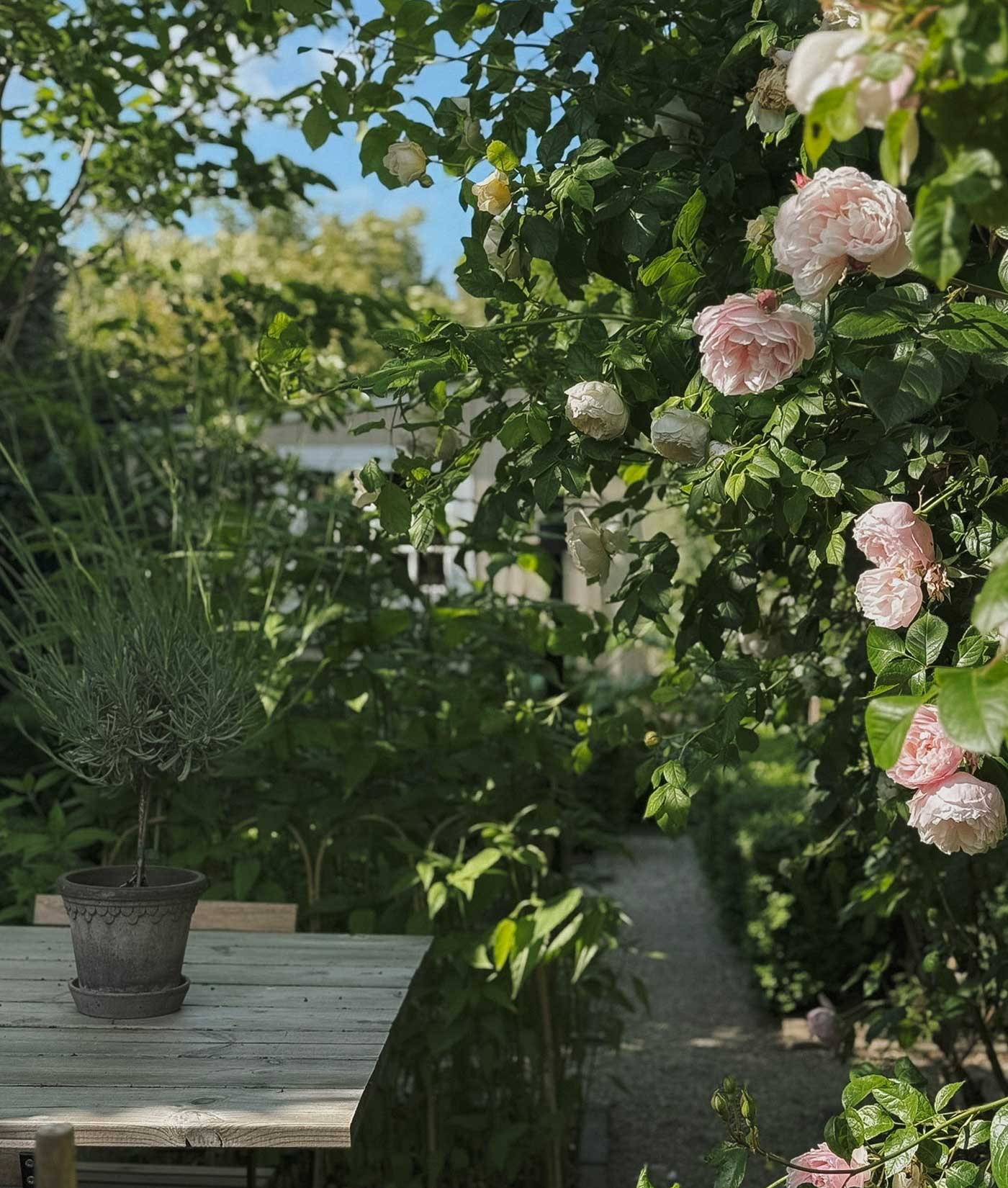
A garden shaped for quiet moments and slow wandering.
If someone stepped into your garden for the first time, what would you hope they’d feel and notice?
I would hope they feel a sense of calm and curiosity, as if gently drawn into the garden and invited to explore. I hope they notice the structure and shifting perspectives, but also the quieter details, like how everything from compost to espaliered trees and the orangery blends naturally into the surroundings.
Most of all, I’d want them to feel the connection between house and garden — and hopefully leave feeling inspired by its simplicity, beauty, and wanting to stay just a little longer.
When you designed your garden, where did you begin: with people, the house, or the land itself?
I began with the site itself, working with the garden’s existing structure, its mature trees, and surrounding elements. At the same time, I focused on creating a natural transition from the house and shaping the space into defined garden rooms that support both function and the atmosphere I wanted to achieve.
A garden should bring several elements together. It should be in harmony with its surroundings and reflect the era of the house, while also accommodating the people who live in and enjoy it every day.
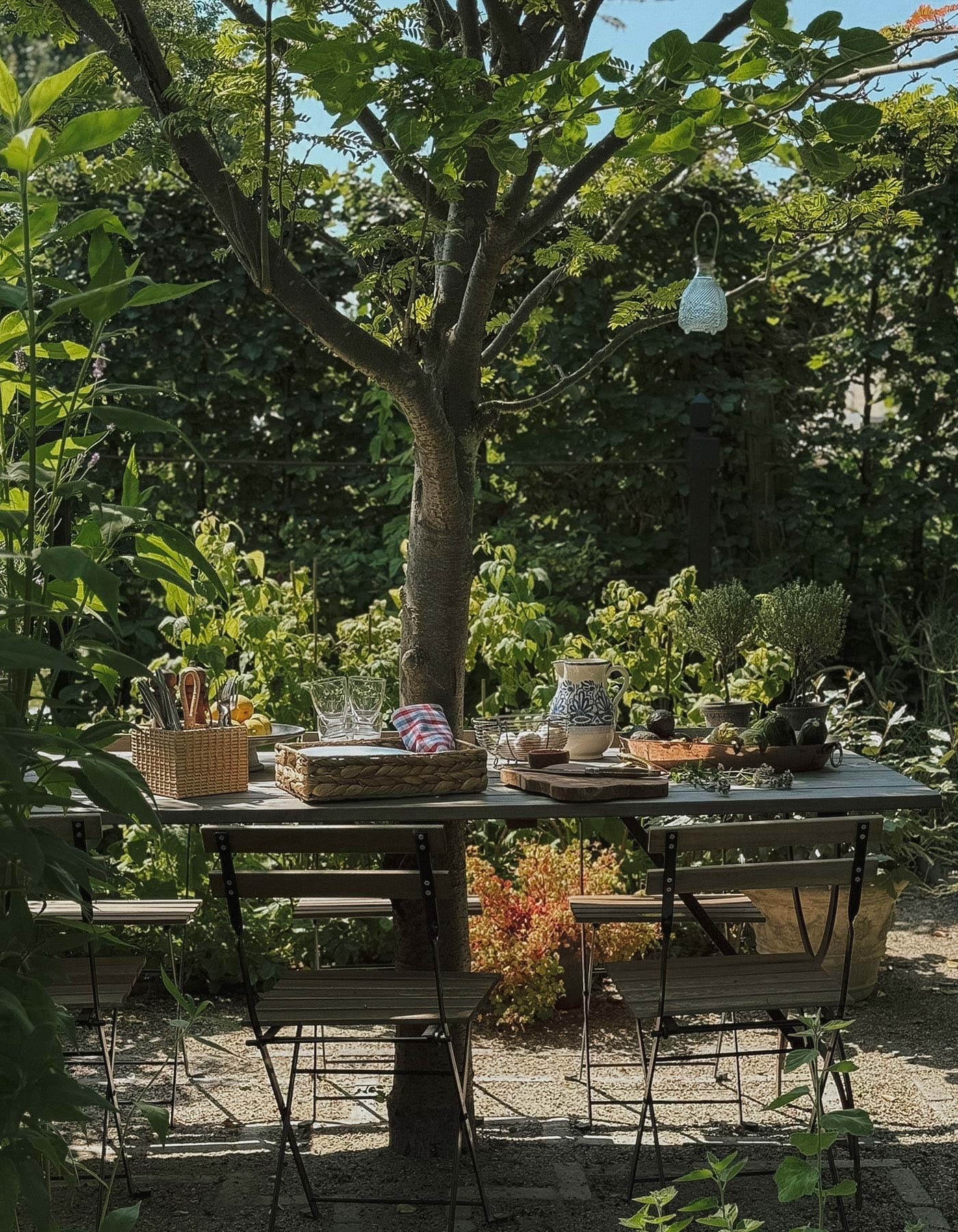
Gathered around the table, surrounded by the garden’s gentle rhythm.
Each space has its own purpose, like rooms in a house.
Nanette Bang
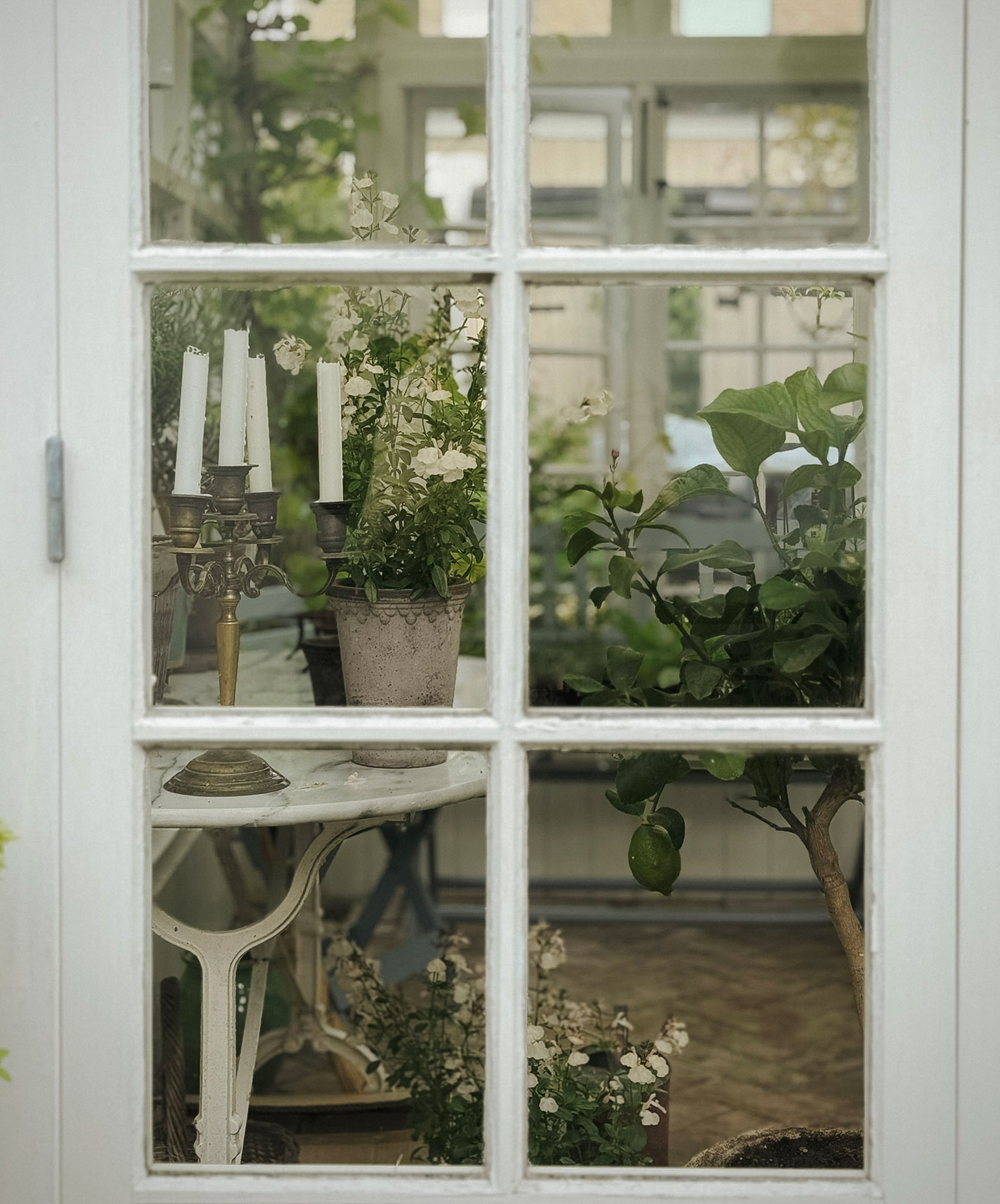
A closer look inside the orangery and its layered greenery..
You have created your garden as a place with different “rooms” – what was the thinking behind that?
The idea was to create a garden with a strong sense of structure, atmosphere, and variation, where each space feels like its own room with a distinct mood and purpose. As the house has smaller, more defined rooms than today’s open architectural style, I wanted to reflect that feeling outdoors — creating a natural connection and harmony between the house and garden, while nodding to the character of a 1930s garden.
Today, the garden unfolds as a series of distinct spaces — a courtyard, a potager, a more private garden, a fountain area, and a small garden room connected to the orangery. Even the more practical elements, like the space for waste containers, have been given their own place, so everything feels considered and part of the whole.
By dividing the garden using hedges, trees, and planting, I could create intimacy, long sightlines, and a natural flow, allowing it to be discovered gradually as you move through it.
What has guided your thinking around atmosphere, function and flow?
I’ve always wanted the garden to feel like a natural extension of the house — both in atmosphere and in the way we use it in everyday life.
Structure plays an important role, shaping smaller spaces that each have their own mood while still feeling connected. Function is just as important — the garden needs to support both activity, rest, and practical needs.
Flow has guided everything. Paths and sightlines invite you to move through the garden and discover it gradually, rather than taking it all in at once.
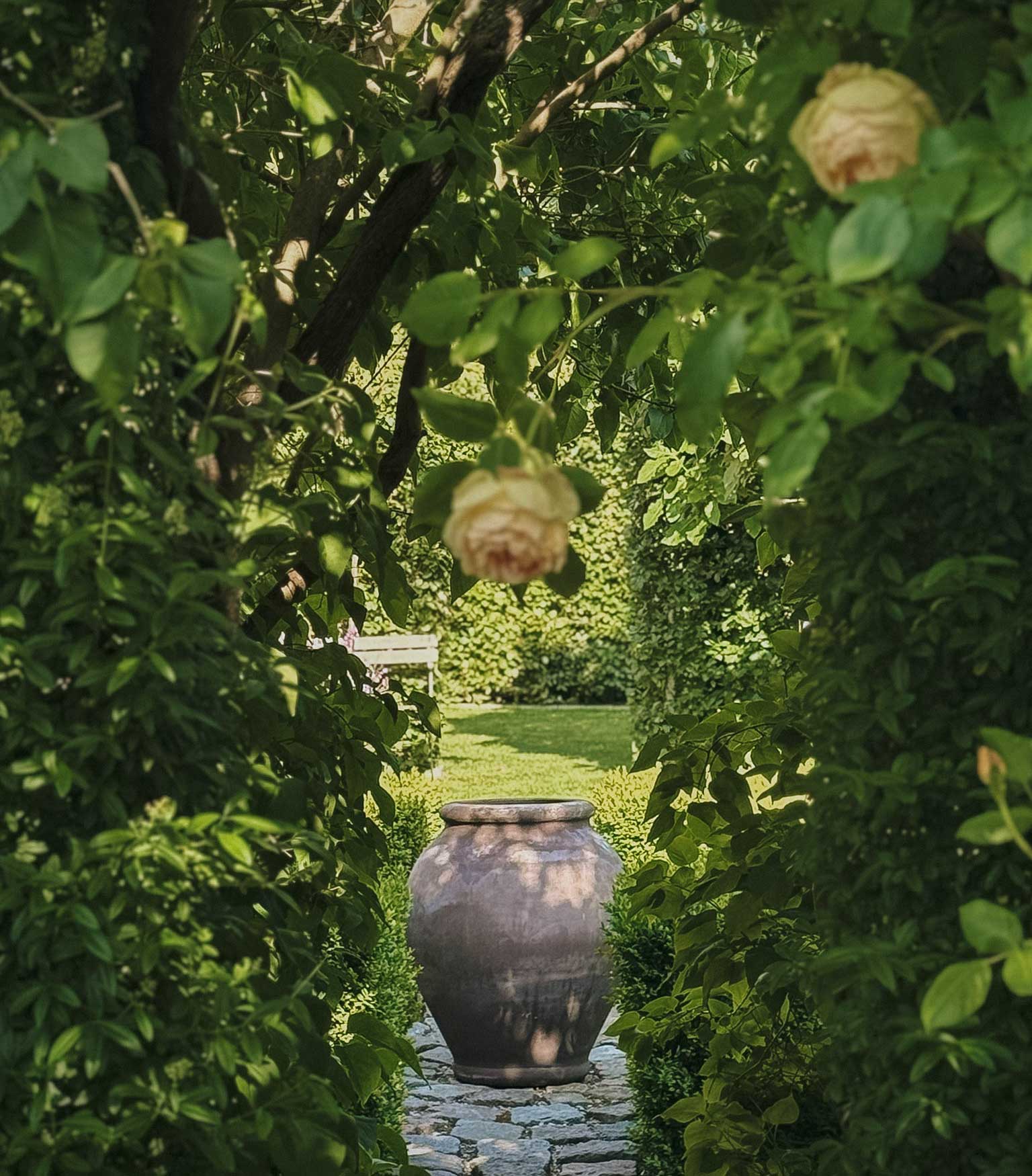
Garden paths and shifting greenery invite you to discover the space little by little.
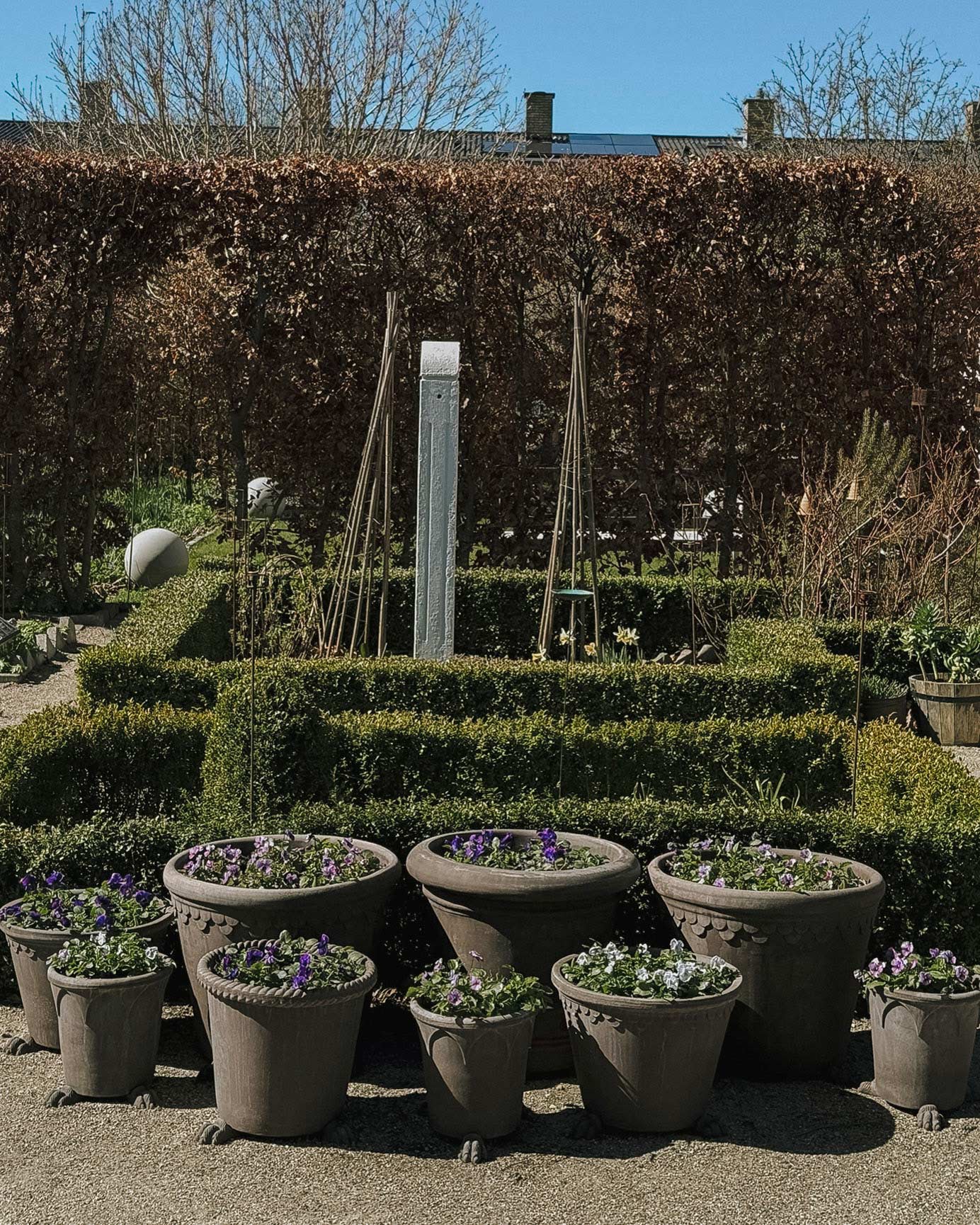
Potted flowers bringing colour and softness to the structured garden.
Why have you chosen to have potted plants play in your urban garden, and what role do they play?
Pots are a joy in the garden. They create small moments of colour and can easily follow the seasons, depending on what you plant in them.
I like their flexibility — they can be moved, changed, and used where planting in the ground isn’t possible. They can frame a space, highlight a tree, or become a small herb garden.
I tend to choose materials and colours that blend naturally with the house and garden, often using evergreens as a base and layering seasonal planting throughout the year. While the planted beds remain quite consistent, pots give me the freedom to change things and play.
What small design choices make the biggest difference when working with a limited garden space?
One of the smallest design choices that can make the biggest difference in a limited garden space is to divide it into defined garden rooms using hedges or planting. By gently structuring the space and limiting what can be seen at once, the garden feels larger, more intimate, and full of discovery.
At the same time, paths that guide movement through the garden create variation and allow it to be experienced from different angles. Vertical planting — like espaliered trees or climbing plants — adds further depth and makes full use of the space.

Structured hedges creating small moments of discovery throughout the garden.

A small arrangement of potted blooms in our Københavner pots.
What advice would you give to someone wanting to create an urban garden that feels calm, generous and inviting year-round?
I think the most important thing is to create a sense of structure from the beginning. Even a small garden can feel much bigger when it’s thoughtfully shaped.
It’s also important to think of the garden as something you experience all year round. There’s a quiet beauty in the colder months, where evergreens play an essential role.
Once that foundation is in place, you can start adding softer, seasonal layers. Pots are a simple way to do this — they allow you to introduce change, place herbs close to the kitchen, or gently guide how you move through the space.
You often speak about food from the garden as a source of joy – which easy to grow edibles bring the most pleasure, in your experience?
As a child, gardening was one of my least favourite things — unless I was allowed to sow peas. There was something magical about it. How a small, dry pea could turn into something full of life still fascinates me.
It almost looks lifeless, and yet everything is already there — roots, tendrils, flowers, and new pods waiting to unfold. A dried pea isn’t the end of something, it’s the beginning.
Peas have followed me ever since. Even when I only had a small terrace, they were always there. The taste of a pea straight from the pod is hard to compare to anything else — that sweetness and crisp texture.
It’s like the garden’s own kind of caviar — simple, affordable, and incredibly easy to grow.
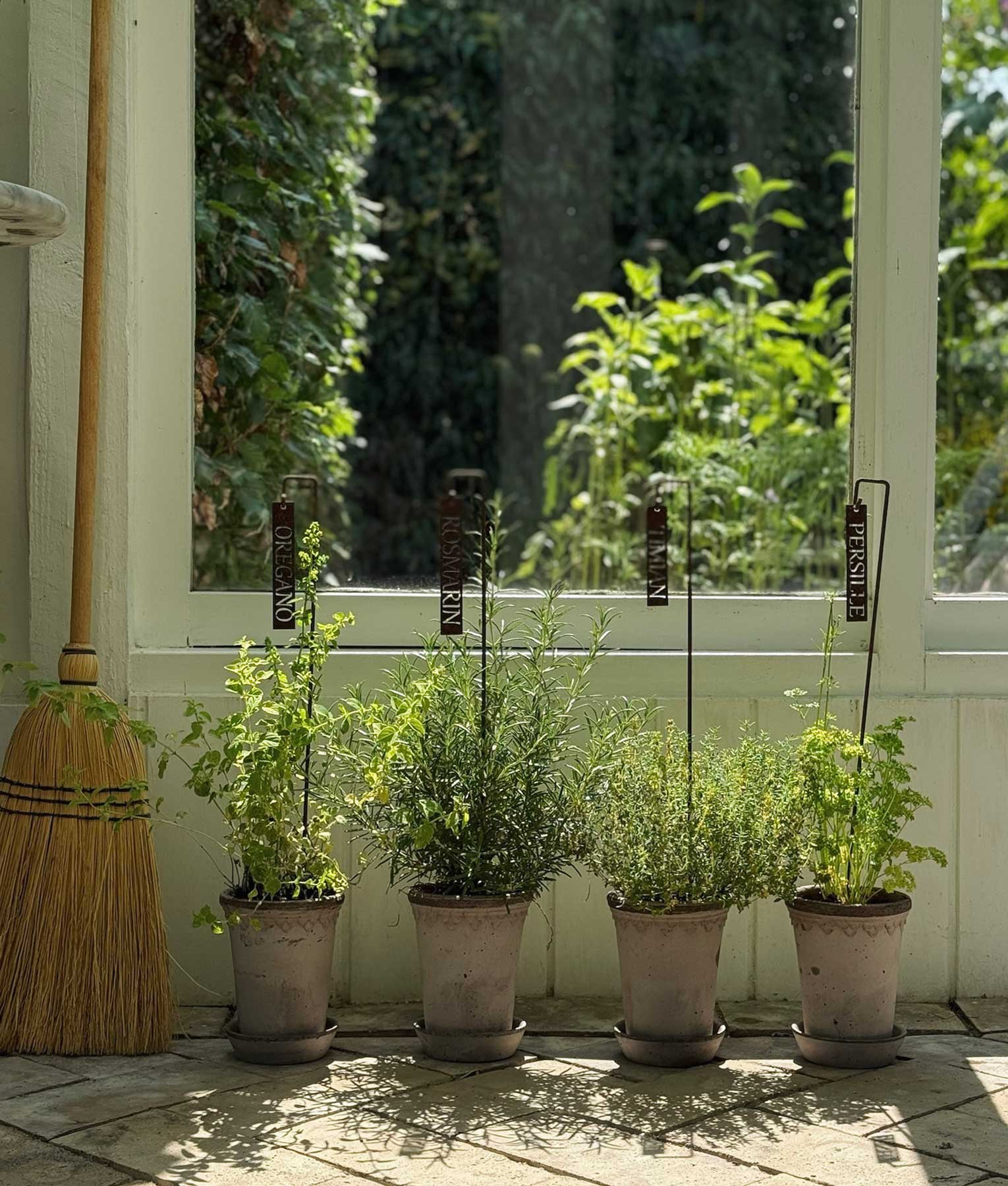
A row of kitchen herbs soaking up the light.
Feeling inspired by Nanette’s world?
Follow her on Instagram @storbybonden for more glimpses of her urban garden in Copenhagen, where structure, calm, and seasonal planting come together – and find inspiration to shape your own outdoor spaces.
Words: Bergs Potter & Nanette Bang. Photos: Nanette Bang.
We are always curious and eager to learn how and what you grow in your corner of the world – and not at least how you are living with Bergs Potter. Please share your experience by tagging us on Instagram or Pinterest; #livingwithBergs, #bergspotter.
Other stories you might like
https://bergspotter.com/wp-content/uploads/2025/09/lily_featured.jpg
799
1200
Frederik
https://bergspotter.com/wp-content/uploads/2024/03/bergs_potter_logo_dark.svg
Frederik2025-09-25 12:58:092026-02-27 14:30:16Where Lily Lands https://bergspotter.com/wp-content/uploads/2025/03/these_beautiful_things_featured_journal.jpg
1067
1600
Frederik
https://bergspotter.com/wp-content/uploads/2024/03/bergs_potter_logo_dark.svg
Frederik2025-03-12 10:50:252026-06-15 12:42:52A Postcard From: Viktoria Askerow
https://bergspotter.com/wp-content/uploads/2025/03/these_beautiful_things_featured_journal.jpg
1067
1600
Frederik
https://bergspotter.com/wp-content/uploads/2024/03/bergs_potter_logo_dark.svg
Frederik2025-03-12 10:50:252026-06-15 12:42:52A Postcard From: Viktoria Askerow https://bergspotter.com/wp-content/uploads/2024/08/bergs-potter_-lr-jhdh-027-__dsf1521_helena_koebenhavner_spring-vibes_raw_raro_jhdh_hz_co.webp
1707
2560
Line Sørensen
https://bergspotter.com/wp-content/uploads/2024/03/bergs_potter_logo_dark.svg
Line Sørensen2024-08-26 13:44:462026-01-19 10:39:45It’s Terracotta Gardening Season
https://bergspotter.com/wp-content/uploads/2024/08/bergs-potter_-lr-jhdh-027-__dsf1521_helena_koebenhavner_spring-vibes_raw_raro_jhdh_hz_co.webp
1707
2560
Line Sørensen
https://bergspotter.com/wp-content/uploads/2024/03/bergs_potter_logo_dark.svg
Line Sørensen2024-08-26 13:44:462026-01-19 10:39:45It’s Terracotta Gardening Season